
Today is Easter Sunday, the day that we celebrate the resurrection of our Savior and King, Jesus. In the Christian faith there is no more important tenant than the resurrection. It is what the entirety of Christian belief hinges upon. There are some people within the church, and a multitude of people outside the church, who do not fully understand what the resurrection means. There has been a misrepresentation from people in the secular world, especially people who are atheistic in thier beliefs, about what the resurrection means from a theological perspective. This has been compounded by people who profess christianity not having an adequate theological grounding to set the record straight on the resurrection of Jesus.
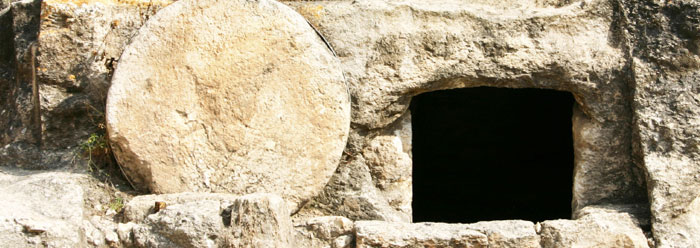
Now after the Sabbath, toward the dawn of the first day of the week, Mary Magdalene and the other Mary went to see the tomb. And behold, there was a great earthquake, for an angel of the Lord descended from heaven and came and rolled back the stone and sat on it. His appearance was like lightning, and his clothing white as snow. And for fear of him the guards trembled and became like dead men. But the angel said to the women, “Do not be afraid, for I know that you seek Jesus who was crucified. He is not here, for he has risen, as he said. Come, see the place where he lay.
Matthew 28:1-6 ESV
To have a better understanding of the resurrection, first it is important to understand what the resurrection is not. The resurrection is not a myth, nor is it copied myth from another religion. There are many people who study the resurrection of Jesus and try and compare it to myths and legends from other world religions. Gary Habermas notes, in his book The Case for the Resurrection of Jesus, “Moreover, while some skeptics like to celebrate these vague similarities, they fail to recognize what great differences exist in these accounts.”1 It is true that other religions do have stories and legends of resurrection, but there are a few reasons why the story of Jesus resurrection be believed over the others. The accounts of resurrections in other religious traditions tend to be unclear, coming from a myriad of sources that are often produced well after the accounts of Jesus resurrection; especially those of the Greek pantheon. The exception to this is the Egyptian cult of the god Osiris. His resurrection narrative predates Christianity but is not a parallel to the resurrection of Jesus. Habermas continues, “Moreover, it is questionable whether Osiris was brought back to life on earth or seen by others as Jesus was. He was given status as god of the gloomy underworld. So the picture we get of Osiris is that of a guy who does not have all of his parts and who maintains a shadowy existence as god of the mummies. As a friend, Chris Clayton, put it, Osiris’s return to life was not a resurrection, but a zombification.”2 The proposition that early Christians lifted stories from other religions in order to give legitimacy to the story of Jesus does not hold up to scrutiny.

The resurrection is not a deception. One of the most popular fraud claims is the idea that the disciples, realizing that Jesus had duped them, decided to steal his body so that they could save face in front of everyone that didn’t believe that Jesus was the Son of God. A very popular spin off of that fraud claim is that someone other than the disciples stole the body of Jesus for unknown reasons and the disciples bought into the fraud themselves and perpetuated the resurrection story. According to Habermas, “Fraud appears to be the first opposing theory proposed by Jesus’ critics. The gospel of Matthew reports that the Jewish leaders in the first century spread the story that Jesus’ disciples had stolen the body. In a.d. 150, in his Dialogue with Trypho, Justin Martyr writes that the Jewish leadership was still spreading the same rumor in his day.”3 These claims fall flat for a variety of reasons, with the most compelling being the eyewitness accounts of the resurrected Jesus from a variety of sources the most compelling of which are James (1 Corinthians 15:7), the brother of Jesus, and Saul, who would become known as Paul (Acts 9:1-19).
James had rejected Jesus during his earthly ministry, even in light of the miracles Jesus had performed. James hearing that Jesus had “risen from the dead” would have seemed, to him, like another lie perpetuated by his followers. It would have taken something undeniable for James to be convinced that Jesus had actually risen from the dead. A meeting with the living Jesus would definitely be undeniable enough to give the ultimate proof for Jesus’ brother.
Saul would have been another person who would not have been convinced easily. He had been the primary oppressor of Jesus followers. He had made it his main goal in life to eradicate the followers of Jesus and to expose Him for the fraud that he thought Him to be. Some type of fraud or deception would have been the first conclusion that Saul would have had upon hearing the news that Jesus had risen from the dead. It took significant proof for Saul, a man who stoned and persecuted people who claimed to follow Jesus, to walk away from his beliefs and embrace a new life as Christianity’s most vocal missionary, Paul.

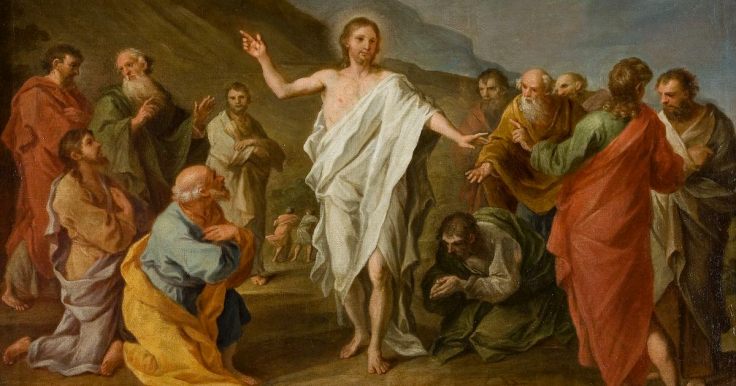
We have looked at what the resurrection is not. It is not a fraud, deception, or any other conspiracy. It is not a myth or legend, either lifted from another tradition from another religion or made up by the disciples of Jesus in the wake of his death. Now it’s time to look at what the resurrection is. In the light of all the evidence, the resurrection would have to be considered a true historical event. R. Douglas Geivett and Gary Habermas conclude, “While it is true that some appeals to miracles in defense of particular religious beliefs have been inelegant, misguided and grossly exaggerated, the hypothesis that God has acted in history is a reasonable explanation for certain historically well-attested events.”4 Modern scholarship is replete with scholars who affirm the existence of miraculous action by God in the course of human history. These scholars have studied the circumstances surrounding the resurrection of Jesus and how those circumstances interact with the context of the time in which the resurrection claims were made. The eyewitness testimony recorded in the gospels was written and passed around throughout the early church soon enough after Jesus was crucified, buried, and resurrected that anyone who read the accounts could seek out people who had actually seen Jesus resurrected and hear the story from people who actually lived it. The first witnesses to the resurrection were women. If the disciples were trying to perpetuate a deception, they wouldn’t have used women who were not even allowed to testify in a trial, as the ones to spread such an unbelievable story. If it were a conspiracy, it would have fallen apart long before all of the disciples were killed for their insistence that Jesus had risen from the grave and walked among them as alive as any of them were. In regards to a cleverly created conspiracy related to Jesus resurrection, Charles Colson has this to say:
“But what about the disciples? Twelve powerless men, peasants really, were facing not just embarrassment or political disgrace, but beatings, stoning’s, and execution. Every single one of the disciples insisted, to their dying breaths, that they had physically seen Jesus bodily raised from the dead. Don’t you think that one of those apostles would have cracked before being beheaded or stoned? That one of them would have made a deal with the authorities? None did.”5
If anyone is an authority so speak on conspiracies, it would be Charles Colson, who was once known as one of President Richard Nixon’s “hatchet men.” He was one of the Watergate seven, and saw that conspiracy fall apart in a matter of days. He later went on to become a devout Christian and evangelist. If that conspiracy fell apart in just a short time when all of the participants were only looking at short periods of incarceration, it seems highly likely that the at least one of the disciples would have spilled the beans about a fraud concerning the risen Jesus if it were not true, especially facing certain death and torture.
When looking at the resurrection in the context of the evidence for it being true and reliable, it becomes an undeniable fact that all other facts are built upon in the life of the believer. Jesus, after his death and burial in a borrowed tomb, was resurrected to life having defeated death and the grave. We serve a risen Savior and King, who through his sacrifice gave us the ability to be reconciled to a righteous God. That is what we celebrate today! Christ’s glorious resurrection, the life altering biblical truth that we hold in the highest regard as historical fact attested to with undeniable evidence.
- Habermas, Gary R., and Michael R. Licona. 2004. The Case for the Resurrection of Jesus. Kregel Publications, 90. ↩︎
- Ibid, 91. ↩︎
- Ibid, 93. ↩︎
- Geivett, R. Douglas, and Gary R. Habermas. 1997. “Conclusion: Has God Acted in History?” In In Defense of Miracles: A Comprehensive Case for God’s Action in History, edited by R. Douglas Geivett and Gary Habermas. IVP Academic, 266-267. ↩︎
- Chuck Colson, “An Unholy Hoax? – Breakpoint,” Breakpoint, March 29, 2002, https://www.breakpoint.org/an-unholy-hoax/. ↩︎

 From The Pastor's Desk
Leave a comment